
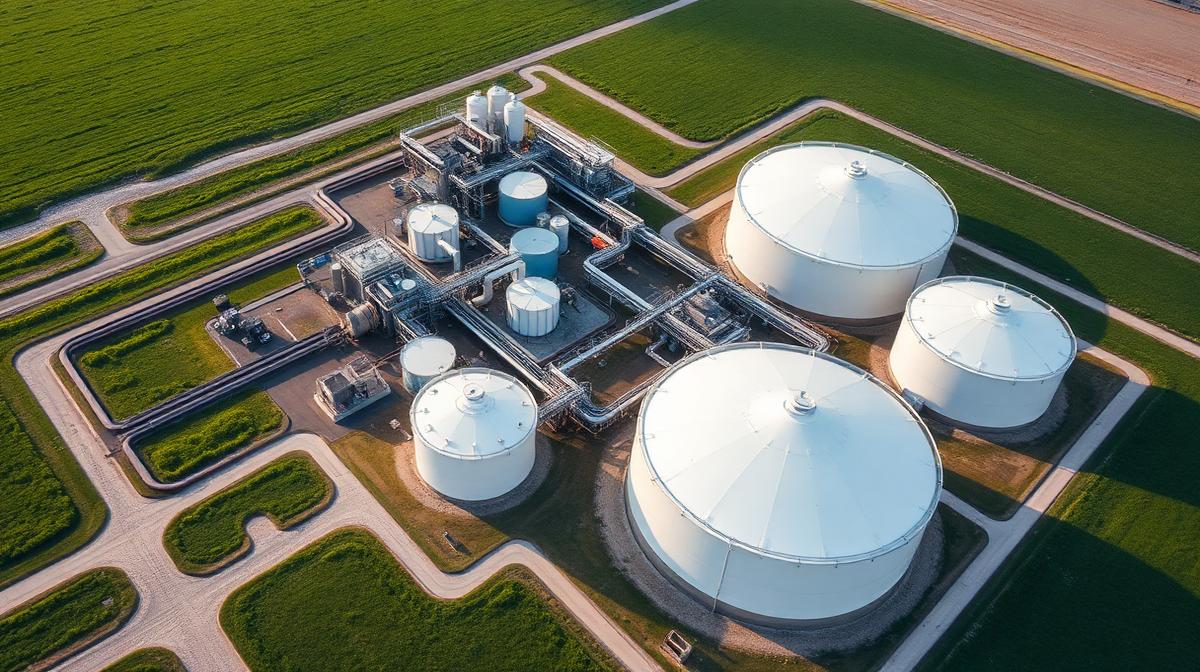
Great Plains Organic Waste Sequestration
About this project
The Great Plains Organic Waste Sequestration project converts organic waste into bio-oil through pyrolysis and injects it deep underground into geologic formations for permanent carbon storage. This process effectively reverses the natural carbon cycle by taking carbon that was recently in the atmosphere (via plants and organic waste) and locking it away underground for millennia.
Located in Kansas, US, the facility processes agricultural and municipal organic waste streams, converting them into a stable bio-oil that is then injected into deep geological formations where it solidifies and becomes permanently stored.
Technology
Bio-oil and Geologic Biomass Storage
Pyrolysis converts organic waste into bio-oil — a carbon-rich liquid. This bio-oil is then injected into deep underground geologic formations (typically 1,000+ meters deep) where conditions cause it to solidify over time. The carbon is permanently removed from the atmosphere and stored in stable geological formations, similar to how fossil fuels were originally formed over millions of years.
Durability
10,000+ years permanence
Once injected into deep geological formations, the bio-oil becomes trapped by impermeable cap rock layers. Over time, the oil solidifies and mineralizes, becoming part of the rock formation itself. This process provides permanence on geological timescales — well beyond 10,000 years — making it one of the most durable forms of carbon removal available.
Project Details
Annual capacity
40,000 tonnes CO₂e
Price per tonne CO₂e
€444.14
Risk of reversal
Negligible
Buffer pool contribution
5%
Calculation method: The amount of CO₂ sequestered is calculated based on the mass of bio-oil injected, its carbon content (measured via lab analysis), minus any emissions from the pyrolysis and injection process. Third-party verification is performed by Isometric.
Senken Due Diligence
Sustainability Integrity Index (SII)
PassedThis project has been independently reviewed and passed the Senken Sustainability Integrity Index — a comprehensive assessment covering carbon accounting, additionality, permanence, environmental safeguards, and social impact.
UN Sustainable Development Goals
Industry, Innovation and Infrastructure
Advances innovative carbon removal technology and infrastructure.
Sustainable Cities and Communities
Processes municipal waste, reducing landfill burden and emissions.
Certifications
Certifier
Isometric
Standard
Isometric Standard v1.0
Registry ID
ISO-GP-2024-001
Developer
Vaulted Deep
Registration date
January 15, 2024
Crediting period
2024 — 2034
Methodology
Geologic Biomass Carbon Storage